| |
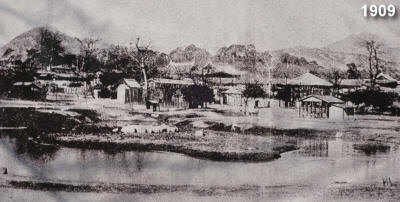 Already in era of the so called Three Kingdoms (57 BC - 668 AD) monarchs
has an ornamental gardens in which animals were bred. However, many
thing is not known about these breedings and apparently it was not a
menagerie in the true sense of the word. So the first zoo in the Korean
territory is dated to much later times - to 1909.
In the late 19th
century, Korea was part of China, but after the victory of Japan in the
Sino-Japanese War (1894 - 1895), Korean king Gojong declared independent
Korean Empire. He elevated self to emperor to put on the same par with
Chinese and Japanese monarchs and achieved recognition of independence.
However Japan had its interests in Korea, which was supported by several
international treaties (e.g. recognition of Japanese interests in Korea
by Great Britain). The influence of Japan in Korea strengthened
especially after the Japanese victory in the Russo-Japanese War (1904 -
1905), when although the Japanese recognized the independence of Korea,
but also enforced the constant supervision. Their influence on the
Korean peninsula became strong enough that changed to the invasion in
1910 and continued until the end of the WWII.
 Japanese commited many crimes on Koreans and greatly destroyed the
Korean sights (in an effort to abolish the majority Confucianism and
turn Korea to Buddhism, which was majority in Japan). Paradoxically, the
zoological history of Korea (still one Korea) began by this atrocity.
In the spring 1908,
Japanese began construction of a zoological and botanical gardens,
museums and amusement park in Changgyeong Palace (Changgyeong-gung).
They demolished several palatial buildings, made lake and greenhouses,
created enclosures, cages and stables... On 1st November 1909 the zoo
was inaugurated (as one of the first in East Asia). Already at the
opening, there were (for that time) many interesting exotic animals...
Amur tigers, orangutans, camels, kangaroos, ostriches and many other
animals. Some of them were housed in the palaces. In April 1911, the
Changgyeong Palace was renamed to Changgyeong Garden (or Park -
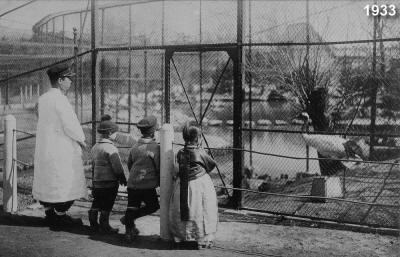
Changgyeong-won). In 1936, the zoo bred around 700 animals of 192
species. Annual attendance soared from 15,000 in the first year up to
1.2 million in 1940. But then the WWII came and the situation rapidly
changed.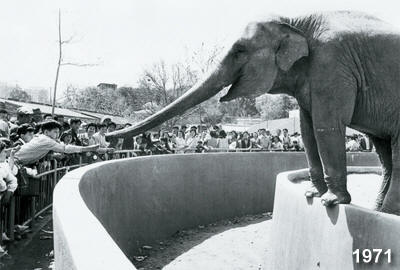
During the war, a zoo
very declined. In 1944, reportedly around 150 animals died - Japanese
poisoned many of them due to lack of food and especially because they
needed to use the keepers as soldiers. Many other animals were killed
during the U.S. bombing. (Some sources mention about 150 animals in
total, other sources 150 animals poisoned by Japanese only and others
killed in the bombing). The zoo was closed at the end of the war
(probably since 1944), only a few small animals survived. After the war
- 26th January 1946, the zoo was re-opened - already as Korean (not
Japanese as before) .
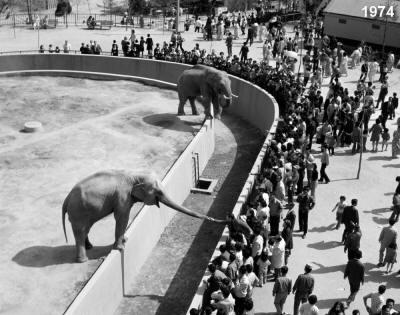 However
it did not work long. After the war, Korea was divided into North and
South, and already in 1950, the Korean War began. The zoo was closed
again in the following year. After the Korean War, it was restored
(1953) although with a small number of animals and in very bad condition
. Nevertheless already in 1954, it was renovated with international
help. Also many foreign zoos donated large animals to Seoul. Even in the
50s was renamed to National Zoological Gardens of Korea (although the
name was used rather abroad). Until 1965, it was the only zoo in South
Korea.
At the turn of the 70s
and 80s, the pressure to get rid of consequences of long Japanese
occupation grew stronger. Many temples started to be restoring and so in
1977, the decision to restore also Changgyeong Palace was made. In this
regard it was obvious that the zoo must be abolished and a new built.
From the outset, the aim was to build a zoo, which will be larger and
better than zoo in socialist Pyongyang - it was founded in 1959 - i.e.
already as socialist and so larger was the effort to trump the capital
of DPRK
In July 1983, the zoo was
closed to the public and 30th December of the same year, last animals
were transffered to the new (still unopened) zoo in Gwacheon (Seoul
Grand Park) - in total of about 900 animals. Also majority of plants
from Ghanggyeong was moved to Seoul Grand Park, where also botanical
garden was built. Changgyeong was subsequently renamed again to Palace,
gradually renovated and listed among UNESCO sights.
In almost 75 years of
existence, the zoo had many species of animals ... It was for example:
tigers, lions, leopards, Asiatic black bears, polar bears, foxes,
raccoons, sea lions, orangutans, chimpanzees, baboons, lemurs and other
primates, elephants, hippos, giraffes, zebras, wisents, Siberian roe
deer, water deer and other deer, camels, horses (breed from the island
of Jeju - this horse was reportedly the first animal born in the zoo),
kangaroos, rabbits, ostriches, raptors, owls, cranes, flamingos,
penguins, waterfowl, peacocks, crocodiles, snakes...
Author: Roman Hynek (2014 , the pictures are taken from
publicly available sources, most of them originated from Korean National
Archive)
|
|