| |
 Paul Kupelwieser - Austrian magnate and the then director of the
Vítkovice ironworks bought the entire Brijuni archipelago in 1893 (at
that time it was part of Austrian Empire, later Austria-Hungary). The
aim was to create a world-class resort and health centre, to where the
European elites from aristocratic, cultural, scientific or industrial
circles could come, as to the French Riviera.
Paul Kupelwieser - Austrian magnate and the then director of the
Vítkovice ironworks bought the entire Brijuni archipelago in 1893 (at
that time it was part of Austrian Empire, later Austria-Hungary). The
aim was to create a world-class resort and health centre, to where the
European elites from aristocratic, cultural, scientific or industrial
circles could come, as to the French Riviera.
The island had been
previously plagued by malaria. Therefore Kupelwieser called up the
famous German physician, microbiologist and bacteriologist Robert Koch
(discoverer of the originator of tuberculosis and cholera, and later
Nobel prize laureate). He managed to completely eradicated malaria from
the island within two years (1900-1902). During this period also all
buildings and other works continued simultaneously. Promenades, swimming
pools, sports facilities, stables etc. were formed. Undersea water
pipeline from the mainland was connected, a power station, boat
connection, telephone exchange and post office were created, about 50 km
of roads, a number of beaches, hotels, villas, golf courses, tennis
courts, racecourse and so on were made... Brijuni became a popular
destination for the most important people of Europe. The most famous
visitors of the island was the German Emperor Wilhelm II, Austrian
Emperor Franz Joseph I and Archduke Franz Ferdinand the Austro-Hungarian
heir to the throne.
Paul Kupelwieser wanted
to give the impression of paradise to guests. Therefore, in 1910, he
invited to the island also Carl Hagenbeck and then together established
here a zoological garden (1911) - at the time as an Acclimatization
station for tropical animals. Because the island has excellent
microclimate the stations served mainly for acclimatization of exotic
animals before releasing into the wild and vice versa during the import
to Europe. The first animals, which were acclimatized here and
subsequently released into the wild have been African antelopes.
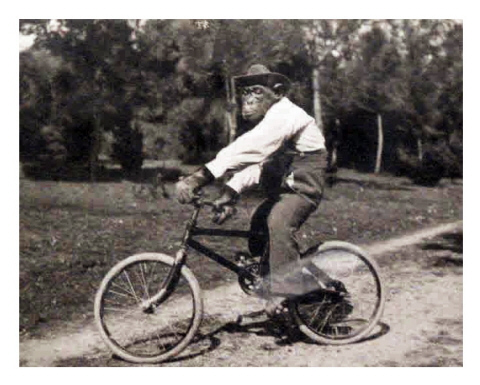
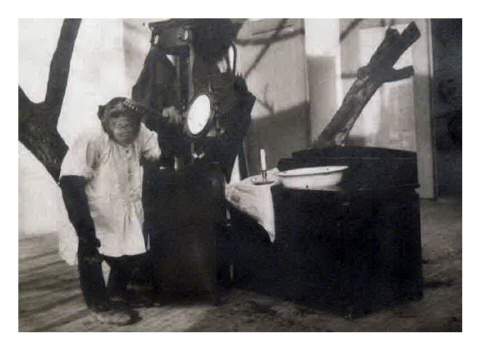 Also
chimpanzee Missie trained by Hagenbeck ranked among the first permanent
and also most popular residents of the zoo. He rode a bike, ate at the
table, played the violin, smoked, danced, shaking the hands of guests... Also
chimpanzee Missie trained by Hagenbeck ranked among the first permanent
and also most popular residents of the zoo. He rode a bike, ate at the
table, played the violin, smoked, danced, shaking the hands of guests...
After the WWI, the
islands passed to Italy. 1919 Paul Kupelwieser died and 1929 the family
gone bankrupt (after the crisis on Wall Street). 1930 Paul's son Carl
committed suicide and the islands came under the jurisdiction of the
Italian Ministry of Finance. Thus began a new era of prosperity, however
it was ended soon by WWII. After the war entire Istria and so also
Brijuni got under Yugoslavia. In 1947 Marshal Josip Broz Tito arrived
here and from the islands made the official state summer residence of
the Yugoslav presidents. The rest of the inhabitants were evicted and
the islands were closed to the public. The zoological garden still
worked, although served only to Tito and diplomatic visitors (ie about
100 heads of state and movie stars from around the world). 1978, Tito
set up an else Safari Park in the north of the island - since that time
both facilities worked concurrently, although were not accessible for
the public. Tito used the islands up to 1979, a year later he died.
1983, the archipelago was declared the Brijuni National Park.
After the independence of
Croatia in 1991, the islands were made accessible to the public -
including Tito's Safari Park, but without Kupelwieser's Zoo. According
to available information it was abolished in 1990. Data on species
composition are far from complete - during the entire existence the zoo
bred many animals, so let's mention at least the known: lions, tigers,
leopards, cougars, cheetahs, brown bears, Asiatic black bears,
antelopes, monkeys, raccoons, moufflons, flamingos, macaws, cockatoos and certainly many
others. Some of them got to the Safari Park, the majority was
transported to Zagreb Zoo and Osijek Zoo.
Autor: Roman Hynek (2012)
|
|